Security guard duties and responsibilities play a vital part in protecting people and property in various environments. Their skills are in high demand and are essential for a variety of sectors, from commercial offices and retail spaces to residential complexes and even construction sites.
In fact, according to the latest figures from the Private Security Industry Regulatory Authority’s Annual Performance Plan, there are currently over 2.7 million security officers registered in South Africa, of which over 650 000 are currently employed.
While their job might seem simple, a security guard’s duties and responsibilities involve much more than deterring crime. That’s why a clear understanding of these duties is important to ensure your security solutions are truly effective. This article will provide a comprehensive overview of the responsibilities that define a security guard’s role.
The Main Responsibilities of a Security Guard
A professional security guard plays a central role in protecting an organisation’s assets, people, and property. These individuals are trained to handle a variety of situations, and are the frontline defense in maintaining order and safety. They are responsible for implementing security solutions that are tailored to their specific environment. Their main responsibilities include:
Patrolling and Monitoring
Security guards patrol assigned areas to deter criminal activity. They may do this on foot or in a vehicle. Their presence alone ensures the safety of people on the premises. They also monitor surveillance system footage for suspicious behaviour.
In addition, they inspect all access points, such as doors and windows, to ensure they are properly locked and secured. A guard at a corporate park, for example, will regularly check the perimeter fence and the entrances to all buildings so that no one can gain unauthorised access.
Access Control and Visitor Management
Controlling access to a site is one of the most important security measures. Security guards manage the entry and exit of all people and vehicles by verifying identification and maintaining detailed logs of everyone who enters a facility.
In South Africa, this is a common practice at corporate buildings in cities or at residential estates. The security guard must also be helpful and provide directions to visitors to get to their destination.
Incident Response and Reporting
When an incident occurs, a security guard must respond to emergencies quickly and take the correct action. This could be a fire alarm or a medical emergency. They are also responsible for incident reporting. This means they must write detailed reports on any unusual activity, irregularities, or breaches.
These reports are crucial for management and law enforcement. A guard at a retail warehouse might report a broken window, for example, so that it can get fixed swiftly and stock is not compromised.
Enforcement and Liaison
Security guards have the authority to enforce rules and policies, which can involve asking a person to leave a site for violating a rule. They also act as the primary contact with outside authorities. During an emergency, they communicate with the police, fire department, or ambulance services for a smooth flow of information. This is a critical part of their duties and can help prevent minor issues from escalating.

Security Guard Roles Across Different Sectors
While core security guard duties remain the same, their responsibilities change depending on the working environments. The focus can shift dramatically based on the needs of the client, and the guards must understand the unique challenges of their assigned location.
- Corporate Security: In corporate buildings, the primary focus is on protecting valuable assets and sensitive information. Guards manage employee and visitor access, ensuring only authorised personnel can enter specific areas.
They also play a key role in monitoring the surveillance system for any suspicious activity that could compromise data or intellectual property. In a busy office tower, a guard might use a biometric attendance system to verify staff identity and log all deliveries.
- Retail Security: The responsibilities of a security guard in a retail setting are centred on loss prevention. They work to deter theft and apprehend shoplifters. During busy seasons, such as the holidays, they are essential for crowd control.
Their presence helps ensure a safe and pleasant shopping experience for everyone. A guard at a large supermarket, for example, might patrol aisles to prevent theft and respond to any altercations between customers.
- Residential Security: For residential complexes and neighbourhoods, security guards focus on the safety and security of the residents themselves. Their duties include patrolling the neighbourhood to deter break-ins and monitoring gated access points.
They often serve as the first point of contact for residents with security concerns. For instance, a security guard at a gated community would log all visitor vehicles and perform regular patrols of the perimeter. This helps ensure that the neighbourhood remains a safe place to live.
In all these roles, incident reporting is a key function. Guards must document any issues they encounter, from minor rule infractions to serious security breaches. This creates a record that management and law enforcement can use later.
Skills and Qualities of a Professional Security Guard
A security guard must possess a specific set of skills and qualities to handle the responsibilities of a security professional. These traits are what allow them to perform their duties with confidence.
- Observational Skills: A top-tier guard can notice small details and unusual behaviour that others might miss. This ability to assess potential threats is vital for preventing incidents before they happen.
- Communication Skills: Security guards need to know how to speak calmly and effectively to clients, colleagues, and authorities. They must be skilled in de-escalation techniques when faced with tense situations. They must also be able to describe a problem clearly when they respond to emergencies.
- Problem-Solving: When faced with emergency situations, a guard must make quick, informed decisions. This requires critical thinking under pressure. For example, a guard might have to quickly decide what to do in the event of a small fire or a medical incident.
- Physical Fitness: Being physically fit is a necessity for the job. Guards must be able to patrol their areas and respond to emergencies quickly. This helps ensure they can handle any unexpected physical demands.
Integrity and Professionalism: A security guard holds a position of trust and integrity at all times. A professional demeanour helps them build confidence with clients and the public, and ensures they are seen as reliable and trustworthy. A reliable security guard understands that their actions reflect on the company they represent.

How Scheduling Supports Security Guards and Teams
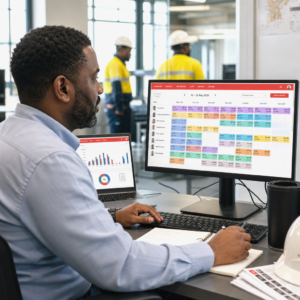
A company’s reputation and profitability depend on having the right people in the right place at the right time. Workforce management software is designed to support this by offering the following solutions:
- Ensures Proper Staffing: The software ensures that the correct number of personnel, with the right grade and skill level, are at the designated sites. This prevents overstaffing and helps control costs.
- Tracks Time and Attendance: A workforce management solution accurately tracks time and attendance. It ensures compliance with labour laws like the Basic Conditions of Employment Act (BCEA).
- Manages Skills and Qualifications: The software manages personnel data, including skills and qualifications. It helps managers assign the best-suited individual for a specific job. This ensures that contractual obligations are met.
- Reduces Administrative Time: By automating and simplifying scheduling, a system reduces the time managers spend on administrative tasks. This frees them up to focus on core duties.
Elevate Your Security Operations
A security guard’s duties are far more than basic patrols. By understanding the full scope of security guard duties and responsibilities, you can ensure your team is at their best to maintain safety and security.
Ready to enhance your security staff with effective workforce management? Download our Workforce Management Software Whitepaper to explore how smarter rostering can lead to increased efficiency and profitability for your business.