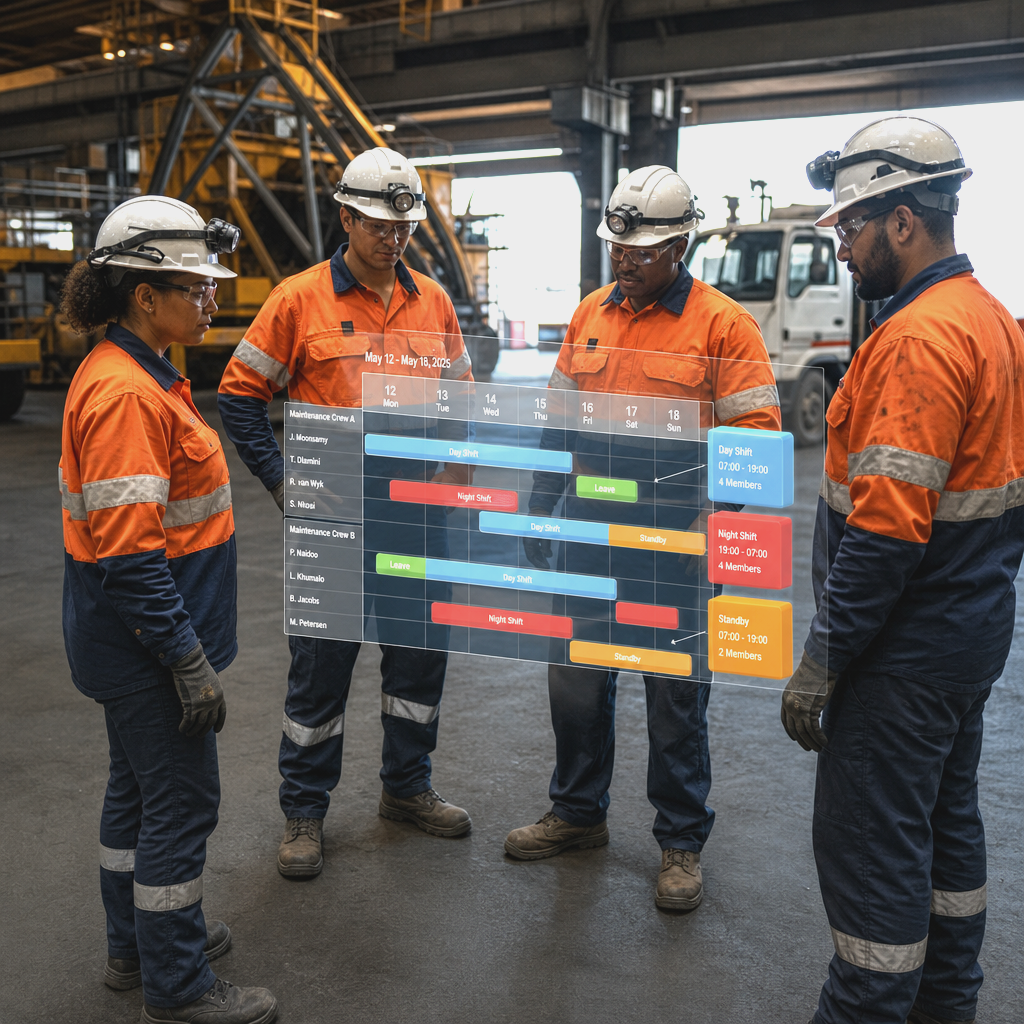
A shift can be fully staffed and still be disfunctional.
The roster may show every position filled. The required number of people may arrive on site. Yet the team may lack someone with the right authorisation, current competency, experience or role-specific knowledge to do the work planned for that day.
For organisations supporting mining operations, this is not a minor administrative problem. It can delay work, create unnecessary pressure on supervisors, increase overtime and force poor last-minute decisions.
Rostering by headcount tells you how many people are available for the shoft. It does not tell you whether the operation will be ready.
Headcount does not equal capability
Traditional rostering often starts with a simple question: how many people do we need on each shift?
It is an understandable starting point, particularly in a large operation with multiple sites, changing requirements and constant pressure to cover absences. But it is only the first cut of a proper roster.
A cleaning contractor may need a certain number of people to cover accommodation facilities. A security provider may need officers with particular site knowledge and current credentials. A maintenance services company may need a team that includes people qualified for specific equipment, working conditions or client procedures.
The requirement is rarely just “five people on day shift”.
It is more likely to be five people with a defined combination of roles, competencies and permissions.
Mining service providers know this well. A team sent to support a shutdown, camp operation, processing facility or site services contract may appear complete on paper, yet still lack the people needed for the planned work. One absent specialist, one expired competency or one poorly matched replacement can affect the whole day.
There is a world of difference between a filled roster and a capable crew.
What skills-based scheduling means
Skills-based scheduling brings workforce requirements into the rostering process.
Instead of assigning people mainly because they are available, planners and supervisors consider whether they are eligible for the work and shift being allocated. This can include:
- The role required on the shift
- Relevant competencies and experience
- Licences, permits or client-required authorisations
- Training records and expiry dates
- Site or contract-specific requirements
- Availability, leave and other roster rules
The precise requirements differ by organisation, site and jurisdiction. A business will define its own rules in line with its operating environment and client obligations.
The point is straightforward: scheduling decisions should reflect the work that needs to be done, not only the number of people needed to fill spaces on a roster.
The cost of finding out too late
When a competency or eligibility gap only becomes visible at the start of a shift, the supervisor is left with limited choices.
They can try to find a replacement. They can move someone from another team. They can call in overtime. They can delay the work. Or they can accept a weaker crew composition and hope the day holds together.
None of these are good planning outcomes.
Last-minute changes also create a chain reaction. Another shift may be left short. An employee may be assigned hours they had not expected. Payroll adjustments become more complicated. Client expectations need to be managed. Managers spend time resolving a problem that should have been identified earlier.
The direct cost is easy to see in overtime, travel, contractor cover and lost time.
A roster should reduce uncertainty. It should not create it.
Make workforce information useful at the point of planning
Many organisations already hold employee information somewhere. Competencies may sit in spreadsheets. Training records may be held by HR. Site requirements may sit in an operations manual. Supervisors may know who can do what through experience.
That information has limited value when it is disconnected from the roster.
The planner needs to see relevant information while assigning people to shifts. The supervisor needs a clear view of whether the crew meets the defined requirements before work begins. Management needs reporting that shows recurring gaps, reliance on particular individuals and areas where workforce development is needed.
This is where a comprehensive workforce management system can make a practical difference.
EasyRoster supports role-based rostering, helping planners build shifts around the roles the operation requires. Eligibility warnings can flag potential issues before a person is assigned to work for which they may not meet the organisation’s recorded requirements. Competency reporting gives managers a clearer view of the workforce capability available across teams, sites or contracts.
The system does not replace management judgement or the organisation’s own operating procedures. It gives the people making decisions better information when they need it.
Build crews, not just shifts
A strong roster considers how the team works together.
There may be people with the required individual skills, but the team may still be poorly balanced. A shift made up entirely of less experienced workers, for example, may need more supervision than the roster allows. A site services team may rely too heavily on one person who understands a particular client process. A security contract may have only one individual who can cover a critical role.
These are workforce planning issues, and the roster is often where they first become visible.
Skills-based scheduling helps organisations identify dependency on individual employees, recurring skill shortages and weak coverage across shifts. It creates a more useful conversation between operations, HR and management:
- Which roles are difficult to cover?
- Where are we relying on overtime to compensate for a capability gap?
- Which competencies are concentrated in too few people?
- What training or recruitment decisions would improve resilience?
- Can we meet new contract requirements with the workforce we have today?
Those questions matter as much in facilities management or security as they do for companies providing services to mining sites.
Better planning supports better decisions
No rostering system can remove every last-minute absence or operational change. People become ill. Clients change requirements. Projects expand, contract or move at short notice.
The aim is not a perfect plan. The aim is to identify foreseeable problems early enough to deal with them properly.
When planners can see the roles required, the people available and any potential eligibility concerns in one place, they have more time to make sensible adjustments. They can arrange cover, revise the work plan, speak to the client or address a skills gap before it becomes a shift-start crisis.
That is a better way to run an operation.
For mining service providers and adjacent support operations, workforce readiness has a direct effect on service quality, cost control and the confidence clients place in the contractor. The same principle applies wherever people are deployed across shifts, locations and customer sites.
A roster should be more than a list of names against a date. The rostering process should ensure that the team assigned to the work has been considered properly.
EasyRoster helps organisations move towards that standard through role-based rostering, eligibility warnings and competency reporting. If you would like to see how this could work in your own operation, book a demo with the EasyRoster team.