Growth exposes weak workforce processes quickly.
A mining service provider such as a security or maintenance service provider may win a new contract, add a location, expand a shift pattern or bring another contractor group into the operation. On paper, the workforce simply gets larger. In practice, every extra employee, role, location and roster rule adds another point where manual processes can fail.
Spreadsheets get copied. Supervisors start working from different versions of the roster. Eligibility checks become harder to complete before a shift starts. Payroll and operational teams spend more time resolving exceptions than planning ahead.
Such growth is welcome and often “a nice problem to have”. The real issue however is trying to manage a larger, more complex workforce with systems designed for a smaller one.
Expansion creates more than a headcount problem
When operations grow, workforce administration does not increase in a straight line.
Adding one new location can mean new shift patterns, different supervisory structures, additional job roles, more leave requests, altered travel arrangements and a wider mix of permanent and contracted personnel. A new customer contract may bring different reporting requirements or expectations around who is approved to work in particular roles.
The risks tend to appear in ordinary, repetitive work:
- A supervisor allocates someone to a shift without seeing an expired eligibility record.
- A payroll team receives roster information late or in a format that requires manual rework.
- A worker is included on the wrong rotation after a roster change.
- A manager cannot see whether the required roles are covered across several sites.
- Different teams maintain their own versions of employee and shift information.
None of these problems are dramatic in isolation. Together, they create avoidable pressure on operations, HR, finance and site management.
As complexity increases, a workforce system needs to provide a reliable operational view rather than becoming another source of administration.
What should scale as the operation grows?
A scalable workforce approach does more than hold a larger employee database. It keeps the organisation able to plan, allocate and review work without steadily adding manual checking and spreadsheet reconciliation.
Mining service providers and adjacent mining operations should look closely at five areas.
1. A consistent workforce record
Growth often means that employee information is maintained in more places by more people. That is where inconsistencies start.
A central workforce record should bring together the information needed to manage deployment: employee details, roles, competencies, certifications, sites, roster assignments, leave, availability and relevant eligibility information. The aim is straightforward. People making roster decisions should be working from the same current information.
This becomes particularly important when a business operates across multiple contracts or locations. A local spreadsheet may work for one supervisor and one team. It becomes fragile when several managers need visibility of the same workforce.
2. Rosters built around roles, not just available names
A full shift is not automatically a properly prepared shift. Team composition matters.
The roster needs to reflect the roles required at a location, the people assigned to those roles and any internal requirements that affect whether they can be allocated. When an operation expands, it becomes harder for supervisors to hold all of that detail in their heads.
Role-based rostering gives managers a clearer way to plan the workforce around the actual structure of the shift. It also makes gaps more visible. If a required role is unfilled, or a planned allocation needs attention, the issue should appear before it becomes a last-minute scramble.
For service providers supporting mining operations, this is often where the value lies. The system helps the organisation manage the people, schedules and role requirements that sit around the operation, without claiming to run the mine itself.
3. Eligibility and competency visibility
Workforce growth usually brings more movement between teams, sites and roles. Manual checks become less reliable when managers are dealing with a wider pool of workers and more frequent roster changes.
A practical workforce system should make relevant eligibility and competency information visible during planning. Managers need early warning when an allocation may require review, rather than discovering an issue after a roster has been published or a worker has arrived on site.
Requirements differ between organisations, contracts and jurisdictions. The idea is not that software replaces good management judgement. It gives managers a better basis on which to make decisions and investigate exceptions.
4. Reporting that supports operational decisions
Expansion creates demand for answers that are difficult to produce from disconnected files.
How many people are rostered across each site? Which roles are repeatedly difficult to cover? Where are overtime patterns changing? Are competency records approaching review dates? Which teams are carrying the greatest level of absence or shift change?
These are legitimate management questions. They should not require someone to spend days combining exports from separate systems before the conversation can begin.
Good reporting supports quick decisive action. It helps management identify recurring pressure points, plan recruitment or training needs and see where workforce processes are creating unnecessary cost or risk.
5. A system that reduces exception handling
Every growing operation will have exceptions. Absences happen. Contracts change. Employees move between sites. Supervisors need to respond to events on the ground.
The measure of a scalable system is how it handles this normal operational reality.
If every change requires several emails, a spreadsheet amendment and a manual check across separate records, the administration burden grows faster than the workforce. Managers then spend their time repairing process failures rather than managing performance.
A better approach gives authorised people the ability to update roster information, identify potential issues and maintain a clear record of what changed. That supports faster decisions while preserving control.
Growth needs discipline before it needs more people
It is tempting to treat workforce systems as an administrative purchase that can be addressed after expansion is complete. By then, the workarounds are already embedded. Different sites have developed their own processes, reporting takes too long and key knowledge sits with a few experienced people.
The stronger approach is to put consistent workforce foundations in place before the next contract, site or operating model adds further complexity.
For mining service providers, that means asking some hard practical questions:
- Can management see the workforce position across sites without consolidating spreadsheets?
- Are roster decisions based on current role, eligibility and competency information?
- Can supervisors respond to changes without creating a chain of manual corrections?
- Does the reporting show where workforce pressure is building?
- Can the process cope if the workforce doubles, or would administration double first?
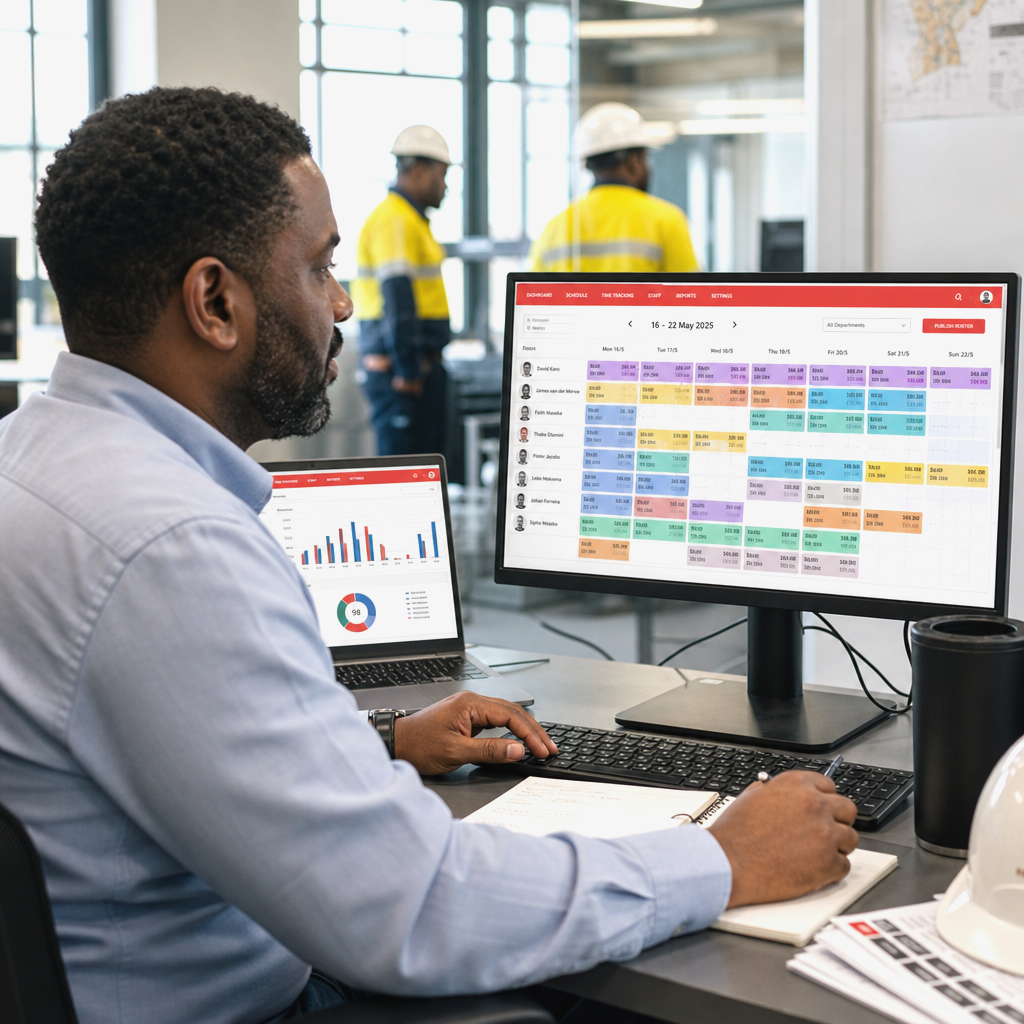
EasyRoster supports role-based rostering, eligibility warnings and competency reporting for organisations managing complex shift-based workforces. It gives managers a clearer view of workforce deployment as sites, teams and contracts grow.
Growth should improve the business. It should not make basic workforce control harder to maintain.
Book a demo to discuss how EasyRoster can support a more controlled approach to workforce growth.