Attendance data is often treated as a payroll input. Someone arrived, someone did not, someone worked overtime, and the record is processed at the end of the period.
That view leaves useful operational information sitting in separate systems, spreadsheets and supervisors’ messages until it is too late to act on it.
For mining service providers and adjacent mining operations, workforce visibility needs to support decisions during the working week, not only explain what happened after payroll has closed. Managers need a practical view of who is scheduled, who is present, where gaps are forming and whether the available people have the right roles and current eligibility for the work ahead.
Attendance data is an important element of operational intelligence.
Attendance records can reveal operational pressure early
A single absence may be manageable. A pattern of absences across a particular site, role, shift or contractor group may point to a problem that needs attention.
Without a current view, supervisors are left to react shift by shift. They may fill gaps with overtime, move people between teams, or rely on informal knowledge of who might be available. Those decisions may keep the day moving, but they can also create cost pressure, fatigue concerns and further instability in the roster.
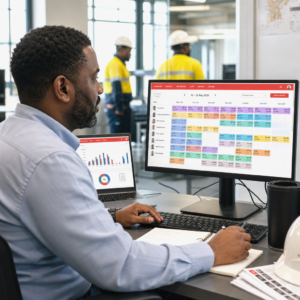
A workforce management system brings the relevant information together:
- planned rostered attendance;
- actual attendance and exceptions;
- open or under-resourced shifts;
- overtime patterns;
- role and eligibility requirements; and
- competency status where it is relevant to the assignment.
The point is not to create another management dashboard and tick a box. The goal of a workforce management system is to provide Operations, HR and payroll teams the same credible current picture of the workforce to enable quick decisions and actions.
A roster tells management what was intended. Attendance shows what took place.
A roster may look complete when it is published. The situation can however change quickly when people are absent, arrive late, are reassigned, or cannot be allocated because a required role, competency or eligibility condition is missing.
If that information sits in disconnected records, managers often only become aware of the issue when the shift is already under pressure.
Modern workforce visibility helps identify questions that are otherwise difficult to answer quickly:
- Which shifts regularly rely on overtime to remain staffed?
- Are certain roles repeatedly difficult to fill?
- Is absenteeism concentrated at a site, on a shift pattern or within a specific workforce group?
- Are planned labour levels consistently different from actual attendance?
- Where are supervisors making last-minute changes most often?
- Are staffing gaps becoming a recurring operational trend rather than an isolated incident?
These are real management questions. Getting the answers should not require a month-end spreadsheet reconciliation exercise.
Overtime is useful data, not just a cost line
Overtime is sometimes unavoidable. It can help maintain continuity when demand changes, people are unavailable or a customer needs additional coverage.
But persistent overtime deserves closer attention.
It may indicate that a roster has insufficient resilience, a role is difficult to fill, absenteeism is rising, or a site is operating with little margin for disruption. Payroll measures the cost. Operations needs to understand the reason.
When roster, attendance and overtime data can be viewed together, managers can move beyond the simple question of whether overtime occurred. They can investigate where it is concentrated, what caused it and whether the same conditions recur.
That gives the organisation a better basis for decisions about staffing levels, recruitment, shift design, contractor deployment and operational planning.
Workforce visibility needs to reach the people who can act
Data is only useful when it reaches the right person in time.
A payroll manager may need accurate approved time records. An HR director may need to understand absence and retention trends. An operations manager may need to know which upcoming shifts are exposed before the problem reaches the customer or site supervisor.
Each role needs a different view, but they should be working from the same underlying workforce information.
EasyRoster supports this through role-based rostering, attendance visibility, eligibility warnings and competency reporting. The system helps managers identify gaps earlier and understand the workforce conditions behind them, rather than relying on manual reconciliation after the event.
For a mining service provider, that can mean seeing a developing staffing problem before it becomes a rushed call-out, an expensive overtime decision or an under-resourced shift.
The value comes from patterns, not isolated records
An attendance record on its own has limited value. Its meaning changes when it is compared with planned work, role requirements, overtime, prior absences and workforce availability.
Consider a contractor team that repeatedly fills the same supervisory role through last-minute reassignment. No individual entry may seem alarming. Viewed over several weeks, the pattern may show a shortage of suitably prepared people, weak succession planning or a roster structure that depends too heavily on a small group.
The same principle applies to absenteeism. A report that simply counts absences is administrative. A report that shows where absenteeism is increasing, where it creates operational exposure and which teams are carrying the resulting overtime gives management something useful to work with.
Good workforce intelligence makes patterns visible early enough to change the outcome.
Build a more dependable picture of the workforce
Mining-related operations involve moving parts: multiple shifts, sites, teams, contractors and changing workforce requirements. A fragmented approach to rostering, attendance and reporting makes it harder to maintain a clear picture of what is happening.
The answer is practical. Bring the workforce data together, make it current and give managers information they can use before the next shift begins.
Attendance data should support far more than payroll processing. It should help organisations understand workforce pressure, plan with greater confidence and deal with emerging gaps before they become normal operating practice.
EasyRoster gives mining service providers and other shift-based organisations a clearer view of their workforce, from planned rosters through to attendance, eligibility and competency information. Book a demo to see how workforce visibility can support better operational decisions.