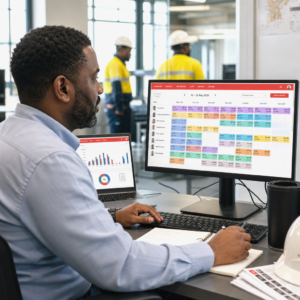
Mining contractors carry a difficult operational burden. A contract may cover several sites, multiple shift patterns, a mix of permanent and temporary employees, and changing requirements from the client. The workforce can include security teams, cleaning crews, maintenance personnel, transport operators, catering staff and specialist contractors, all working to different schedules and site rules.
The immediate question is simple: do supervisors know who is expected on site, who has arrived, which shifts remain exposed, and where resources need to move next?
Too often, the answer sits across spreadsheets, paper registers, WhatsApp groups, separate attendance records and the knowledge held by individual supervisors. This can work for a small contract. It becomes unreliable when an organisation is responsible for hundreds or thousands of people across several mining operations.
A roster is only useful when it reflects the operating reality
A planned roster is a starting point. It does not tell management whether the required people actually arrived, whether a replacement has the right skills for the assignment, or whether the team deployed matches what the client expects.
A supervisor may be dealing with absenteeism at the start of a shift while payroll is working from a separate record at the end of the month. Contract managers may then have to reconcile hours, headcount and deployment information before they can respond to a client query or prepare an invoice.
This creates avoidable delay and uncertainty. It also puts pressure on frontline managers to make decisions without a complete view of the workforce.
For mining service providers, workforce visibility is part of delivering the contract properly. If a cleaning team is short-staffed, a security shift has not been filled, or a maintenance crew is deployed to the wrong area, the client experiences the consequence immediately. The contractor then has to explain what happened using records that may be incomplete or inconsistent.
Multiple sites create a data problem
A contractor supporting one mine may have a manageable workforce picture. Supporting several mines, shafts, plants, depots or accommodation sites changes the problem.
Each location can have its own shift cycles, access arrangements, supervisors, client contacts and staffing requirements. Employees may move between contracts. Relief staff may be assigned at short notice. Contractors may also need to coordinate their own employees alongside subcontractors.
Without a central workforce-management approach, information fragments quickly. The business may know its total headcount but struggle to answer practical questions:
- Which shifts are fully covered tomorrow?
- Where are the current attendance gaps?
- Which employees are scheduled across more than one site?
- What hours and attendance data are ready for payroll review?
- Can the contract manager give the client a credible deployment update without several rounds of manual checking?
These are operational questions, not administrative detail. They influence service levels, labour cost, client confidence and the ability to respond when plans change.

Bringing planned and actual deployment into view
A connected workforce-management environment can give contractor managers a clearer view of planned shifts, attendance and deployment across sites. Rosters, time and attendance information, workforce communication and payroll-related inputs can be managed from the same operational foundation rather than assembled from disconnected records.
This does not remove the need for experienced supervisors. It gives them better information to work with.
For example, when a supervisor sees that a shift is at risk, they can communicate with the relevant team, make a replacement decision and update the operational record in a more controlled way. Managers can then see the wider effect across the contract rather than discovering it later through payroll exceptions, service complaints or client escalations.
Mobile access is particularly useful for dispersed workforces. Employees and supervisors need a practical way to view rosters, receive workforce communications and engage with the information that affects their work. For organisations moving people between sites or managing teams outside a central office, this can reduce dependence on informal messages and printed schedules.
Efficiency dashboards should support action
An efficiency dashboard is valuable when it helps a manager decide what to do next.
For a mining contractor, that may mean seeing scheduled versus actual attendance by site, open shifts, recurring absence patterns, overtime exposure or areas where manual reconciliation is consuming management time. The aim is not more reporting for its own sake. It is a clearer management view of where workforce processes are holding back the contract.
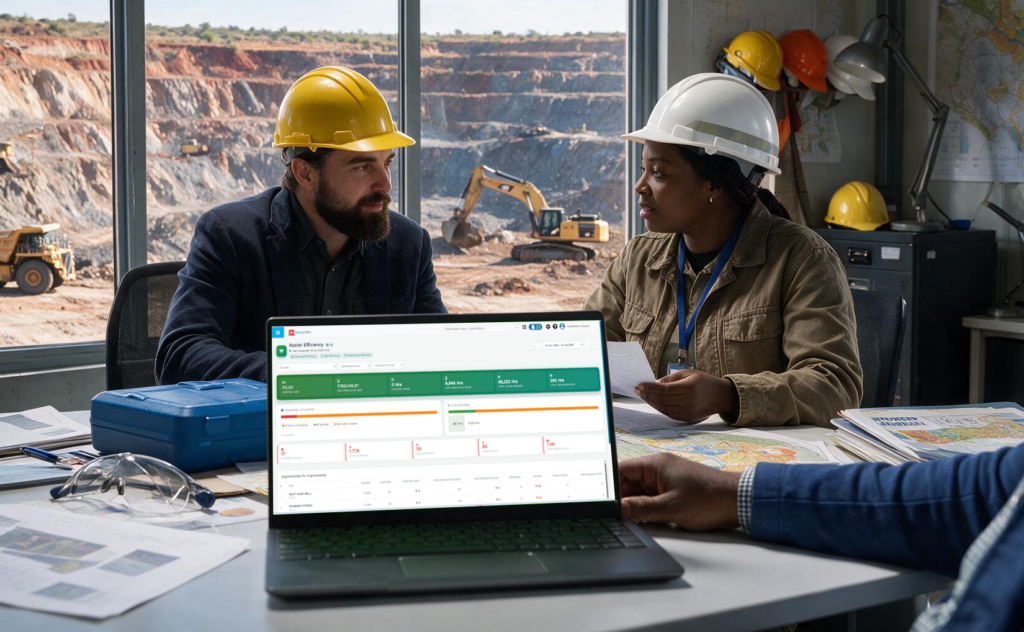
EasyRoster real time efficiency dashboards can help managers bring relevant workforce information into a usable operational view. Used alongside rostering, attendance and reporting processes, they can make it easier to identify exceptions before they become a larger client-service or payroll problem.
The dashboard should support a conversation between operations, HR and payroll. It should not become another isolated report that someone has to interpret after the fact.
Better visibility strengthens the client relationship
Mining clients expect contractors to manage their people professionally. They need confidence that planned services will be delivered, that changes are being handled responsibly and that workforce information can be explained when questions arise.
Contractors who rely on disconnected records spend too much time reconstructing the story after a problem occurs. A more connected approach supports earlier intervention and more credible reporting.
It also gives leadership a stronger basis for assessing contract performance. They can see where staffing models are under pressure, where deployment is repeatedly changing and where processes need improvement before the same issue affects another site.
Build control around the workforce
Contract growth often exposes the weaknesses in workforce processes. More sites, more employees and more client obligations demand more than a collection of spreadsheets and informal communication channels.
EasyRoster can support mining contractors and service providers with rostering, time and attendance, mobile workforce access, communications, payroll-related data, reporting and efficiency dashboards in a connected workforce-management environment.
See your workforce more clearly across every contract
If your teams are spending too much time reconciling roster, attendance and deployment information, it may be time to review how workforce data is managed across sites.