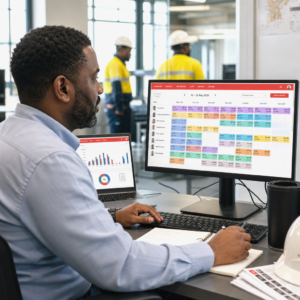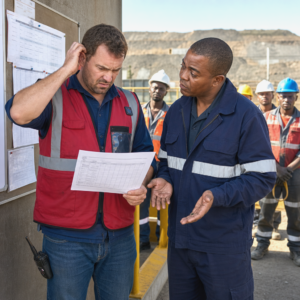
A mining group can have capable people, sound site procedures and well-run individual operations, yet still struggle to answer basic workforce questions at ground level.
Who is scheduled where? Which roles remain unfilled? What has changed since the roster was issued? Are attendance records complete? Which contractor teams are on site? Can payroll teams trust the information they have received?
These questions become harder when a business operates across shafts, pits, processing plants, regional offices or contractor-managed work areas. Each site has its own operating rhythm, workforce mix and practical constraints. But the group still needs a consistent view of how people are being deployed.
When workforce information sits in spreadsheets, local systems, paper records and separate contractor processes, management spends too much time reconciling information after the fact. By then, the operational decision may already have been made.
Multi-site operations create an information problem
Mining operations cannot be managed effectively from a single generic roster. A processing plant, an underground operation and an open-pit site may each require different shift patterns, skill mixes, supervisory arrangements and contractor structures.
Site teams need the freedom to plan around their actual conditions. Group management, HR and payroll teams need consistent information from which to make decisions.
Those two requirements can coexist, but only if workforce management is designed to support both.
A common structure allows each site to manage its own rosters and local changes while working within a shared workforce-management environment. The objective is not to centralise every decision. It is to avoid a situation where every site maintains its own version of the truth.
Without a common view, small discrepancies multiply. A shift change may not reach payroll in the same form in which it was approved. An absent employee may still appear on a report. A contractor record may be held separately from the people they work alongside. Managers then have to establish which record is current before they can act.
That is administration, but it also affects operational control.

A shared view supports better decisions
The value of a single source of truth lies in the quality of the conversation it enables.
An operations manager can see planned deployment across relevant sites rather than chasing local updates. Mine HR can identify recurring staffing pressure or patterns that deserve attention. Payroll teams can work from more consistent roster and attendance information. Site supervisors can focus on managing the shift in front of them rather than reconstructing it at the end of the day.
This does not require every mine to work in exactly the same way. It requires common definitions, accountable processes and information that is visible to the people who need it.
For example, a group may use common workforce categories, attendance rules and approval processes while allowing individual sites to maintain the shift rotations suited to their operating model. A contractor workforce can be recorded within the same broader picture, with appropriate separation of responsibility and access.
The result is a more dependable basis for planning, review and escalation.
Rosters, attendance and payroll-related data need to connect
Workforce data has a habit of becoming fragmented because each function sees only part of the picture.
Operations works from the roster. Supervisors deal with actual attendance and shift changes. HR manages employee information. Payroll needs accurate, approved inputs. Contractors may bring further records and processes into the mix.
If these records are maintained separately, reconciliation becomes a permanent activity. People spend time comparing versions, correcting exceptions and tracing the origin of a change. The cost is not only administrative. Delays and uncertainty make it harder to respond when a shift is under-resourced or when management needs a clear view of deployment.
A connected workforce-management environment can bring roster, attendance and payroll-related information closer together. It can make approvals and exceptions easier to trace, while giving authorised users a clearer view of planned and actual workforce deployment.
The aim is practical: reduce the distance between what was planned, what happened and what the organisation records.
Mobile communication matters across dispersed operations
Multi-site workforces are rarely at desks. Supervisors, employees and contractor teams need timely access to relevant shift information and notices, particularly when changes occur outside normal office hours.
Mobile access can support this by giving employees and supervisors a more direct route to roster information and workforce communication. It also reduces the reliance on informal messages, printed schedules and phone calls as the only way to communicate a change.
The process still needs discipline. A mobile channel does not replace proper approvals or site-level management. It can, however, help ensure that the right people receive the information they need and provide a more consistent experience across locations.

Build control without creating unnecessary central bureaucracy
The temptation in a complex group is to add more reports, more spreadsheets and more approval layers. That usually creates further delay.
A better approach is to establish a shared workforce-management foundation that supports local planning and group oversight at the same time. EasyRoster can support mining organisations with rostering, time and attendance, workforce communication, mobile access, contractor workforce management and reporting in a connected environment.
For mine managers and group leaders, the practical question is simple: when workforce conditions change at one site, how quickly can the organisation see the impact and respond with confidence?
A reliable answer starts with a common view of the workforce.
Bring workforce information into one operational view
EasyRoster can help mining organisations bring roster, attendance and workforce information into a connected management environment. Speak to a workforce-management specialist about the needs of your sites, contractors and group functions.